Have you ever had something in your ear—such as earbuds or hearing aids—and then felt like your own voice was booming and echoing in your head when you spoke? That is known as the occlusion effect. It may also cause the sound of breathing, chewing and swallowing to sound distorted and noisy.
What Causes the Occlusion Effect?
Sounds that originate from inside your body, such as talking, chewing and breathing, are bone-conducted, meaning the sound waves are carried to your auditory system through your bones and other internal pathways, rather than being funneled into the ear. The sound waves escape through the ear.
If there’s an object completely obstructing your ear, the sound waves are trapped, leading them to bounce back into the ear canal and strike the eardrum, making them louder and appear to echo.
Hearing Aids and the Occlusion Effect
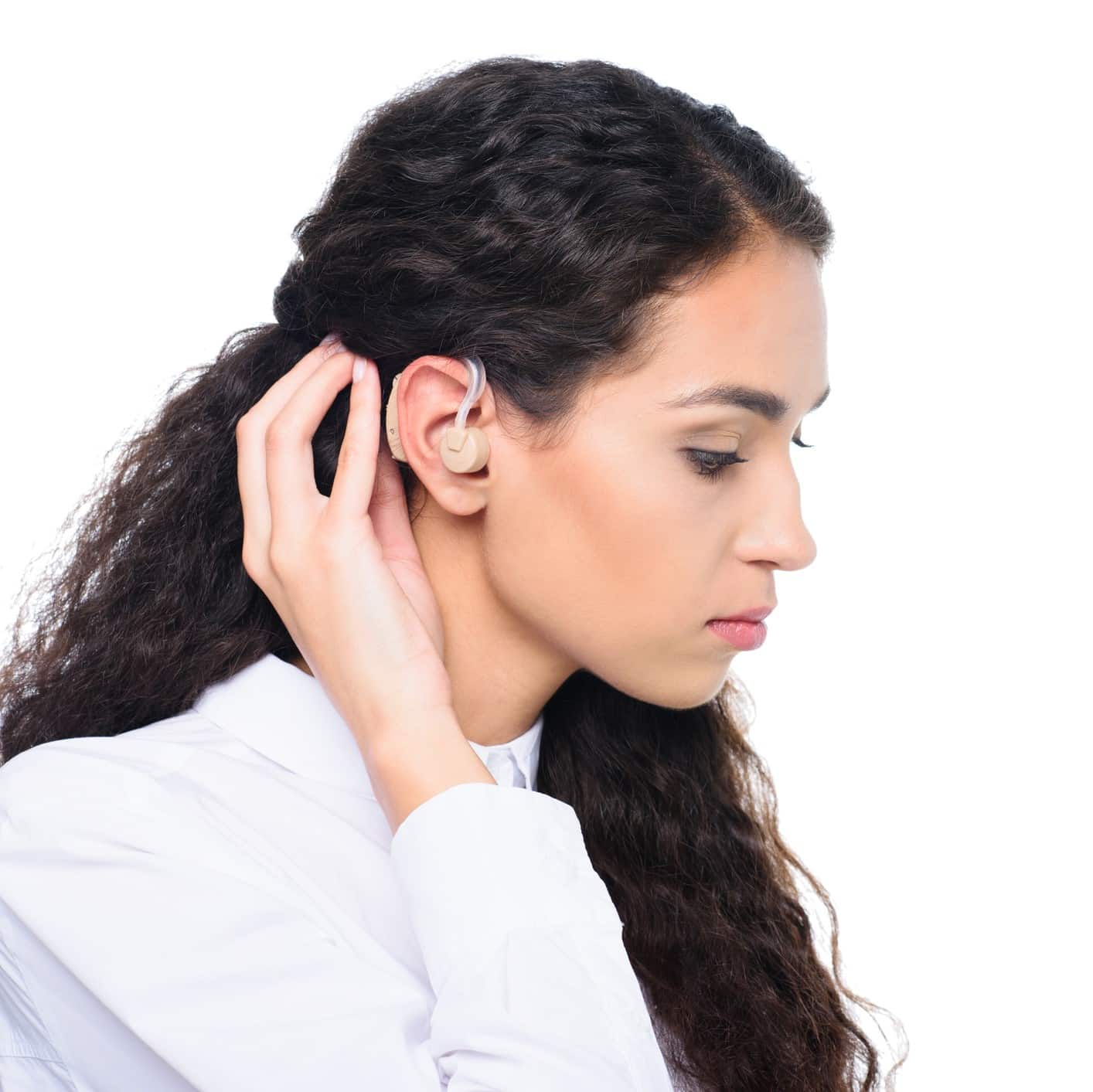
Any obstruction in the ear can cause the occlusion effect, but the effect is most commonly talked about in the context of hearing aids. Hearing aids are vital pieces of technology that will bring many benefits to your health and well-being. However, many people—almost 30%—who could benefit from hearing aids don’t use them, and the occlusion effect is one major complaint that could discourage people from using these necessary devices.
Hearing aids are designed to fit snugly in your ear. In the case of earmolds, they are custom-made to fit your ear canal. All hearing aids have vents to allow for air and internally generated soundwaves to escape, but if these vents are dirty, blocked or improperly sized, it can lead to the occlusion effect.
Reducing the Occlusion Effect
It can be irritating to hear the sound of your own breathing echoing around in your head. The good news is that there are several strategies you can use to address the occlusion effect and lessen its impact on your hearing.
- Maintain the vents. Clean your hearing aids regularly, paying particular attention to the ventilation system. If earwax builds up on these vents, it can seal up the vents entirely, giving sound waves no place to escape.
- Adjust the vents. If your vents are clean and the occlusion effect is still bothersome, consult with your audiologist to ensure they’re appropriately sized.
- Make sure they fit properly. Sometimes the occlusion effect happens because your hearing aids were inserted improperly. Take your hearing aids out and then reinsert them. Alternatively, if it’s been a few years, your ear canals may have changed shape, meaning it could be time to upgrade your earmolds.
- Check the amplification settings. The occlusion effect is especially noticeable with lower-frequency sounds. Adjusting the amplification settings for lower-frequency sounds could solve the problem.
If the occlusion effect continues to be a major problem for you, don’t stop wearing your hearing aids because of it. Speak with your audiologist about the issue and work together to resolve it; your hearing aids should work for you. Call Valley Audiology for more information.